Remote monitoring dashboard and field equipment
How It Works

LoRaWAN monitoring built for places Wi‑Fi and Bluetooth fail.

IRYS IoT uses LoRaWAN (Long Range Wide Area Networking) with cellular backhaul so sensors can communicate across jobsites, yards, compost facilities, fence lines, and remote areas where Wi‑Fi coverage is poor and Bluetooth is impractical.

Battery Powered SensorsNo Site InternetNo Permanent PowerConcrete + Field ConditionsDashboard + Reports

The simple version

We place sensors where conditions matter, move the data wirelessly to a gateway, and send it to a dashboard over cellular. Your team gets visibility, alerts, and records without installing network infrastructure first.

Place the sensors

Battery-powered sensors are deployed at the measurement points: concrete, slab areas, finish spaces, fence lines, equipment zones, compost piles, or other field locations.

Measure continuously

The system collects temperature, humidity, gas, weather, or other condition data automatically instead of relying only on manual spot checks.

Send data wirelessly

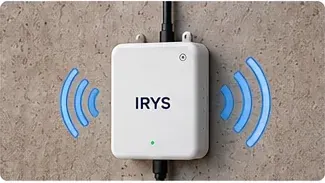
Sensors communicate through difficult field environments using long-range wireless links designed for low-power monitoring applications.

Upload by cellular

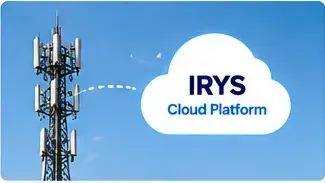
A gateway sends the data to the cloud through cellular service, so the customer does not need to provide internet access.

Why LoRaWAN instead of Wi‑Fi or Bluetooth?

Longer Range

LoRaWAN can cover large outdoor sites from a single gateway. Wi‑Fi and Bluetooth often require multiple access points, repeaters, or close proximity.

Lower Power

Battery-powered sensors can operate for months or years instead of needing frequent charging.

Better for Harsh Sites

Compost, industrial yards, concrete projects, fence-lines, and remote assets rarely have ideal Wi‑Fi infrastructure. LoRaWAN was designed for distributed sensing.

No Customer IT Dependency

Sensors talk to a gateway, then data uploads through cellular. No firewall changes or guest network access.

Supports Moving Sensors

Deploy or relocate sensors while keeping the gateway in place.

Built for Monitoring

LoRaWAN prioritizes reliable low-bandwidth sensor data rather than streaming devices.

Simple: Bluetooth is short-range. Wi‑Fi is power hungry. LoRaWAN is designed for low-power sensors over long distances.
No Power. No Internet. No Trenching.

Designed for jobsites, yards, plants, and remote areas.

Many monitoring projects fail before they start because the site does not have convenient power, usable Wi-Fi, or available IT support. IRYS removes that friction by bringing the monitoring network with the deployment.

Battery-powered sensors

Sensors can be installed where the measurement needs to happen instead of only where power is available.

Cellular backhaul

Data can leave the site through a cellular gateway, avoiding dependence on guest Wi-Fi, office networks, or facility IT changes.

Solar options

For outdoor or longer deployments, gateways can be paired with solar power where practical.

Temporary or ongoing

Deploy for a project phase, warranty period, complaint investigation, compliance record, or long-term operational monitoring.

Solar powered field monitoring gateway

How it works through concrete and hard environments

For concrete and construction use cases, the value is not just collecting a reading. It is getting a defensible record from the actual location where conditions matter.

Concrete

Embedded or placed monitoring

Battery-powered devices can be placed in or around concrete-related areas to document temperature and condition changes during critical phases.

Wireless

Built for low-power transmission

The system is designed around wireless sensor communication rather than Ethernet drops, local routers, or building Wi-Fi.

Records

Data you can review later

When questions come up, your team can review the timeline instead of relying on memory, paper logs, or one-time measurements.

Important: final range and placement depend on site layout, concrete thickness, sensor type, antenna position, and gateway location. IRYS helps plan placement so the deployment fits the jobsite.

What the customer sees

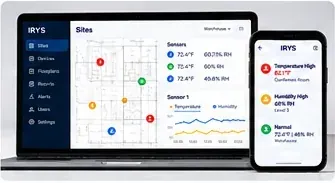
The field hardware is only one part of the solution. The customer experience is dashboard access, alerts, and documentation that can be used by managers, operators, project teams, and warranty teams.

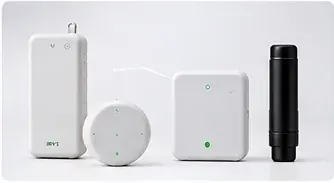
Field monitoring sensor
Live View

Dashboard visibility

View current readings, historical trends, and site conditions from a managed dashboard.

Weather monitoring station
Context

Weather + environment

Add wind, weather, particulate, gas, temperature, or humidity context depending on the use case.

Reporting and documentation
Documentation

Reports and timelines

Turn raw readings into records that are easier to review, share, and use when issues arise.

Where this matters most

Standalone monitoring is strongest when wiring is difficult, the site is temporary, conditions are disputed, or the cost of not knowing is high.

Use CaseWhat gets monitoredWhy standalone matters
Concrete & slab workTemperature, humidity, slab/ambient conditions, critical project phases.Jobsites often do not have reliable power or internet where readings are needed.
Finish work & warrantyAmbient conditions, moisture-related risk indicators, temperature/humidity trends.Creates a record before, during, and after installation without depending on manual logs.
Fence-line gas monitoringNH₃, H₂S, wind, weather, particulate, and event timing.Outdoor fence lines rarely have convenient power, Ethernet, or Wi-Fi.
Compost & organicsIn-pile temperature, weather, gas, and operational condition trends.Sensors can be moved around the operation while gateways stay cellular/solar.
Industrial yards and facilitiesEnvironmental or operational conditions across distributed areas.Independent monitoring can be added without major network changes.

What IRYS handles

The offer is service-led. We are not just selling devices and leaving the customer to figure it out.

Site review

Define the measurement goal, sensor locations, reporting needs, and deployment constraints.

Deployment

Provide and configure sensors, gateways, cellular connectivity, and dashboards.

Monitoring support

Help maintain visibility, adjust thresholds, troubleshoot field issues, and review data when needed.

Alerts

Notify designated contacts when readings move outside agreed limits or when important trends appear.

Reporting

Create summaries, timelines, and documentation packs for operations, closeout, warranty, or incident review.

Lifecycle planning

Use the system for a short project, multi-month warranty window, seasonal monitoring, or an ongoing managed service.

Want this explained for your site?

We can map the sensor points, gateway location, dashboard view, and reporting workflow before deployment.

Request a Site Review