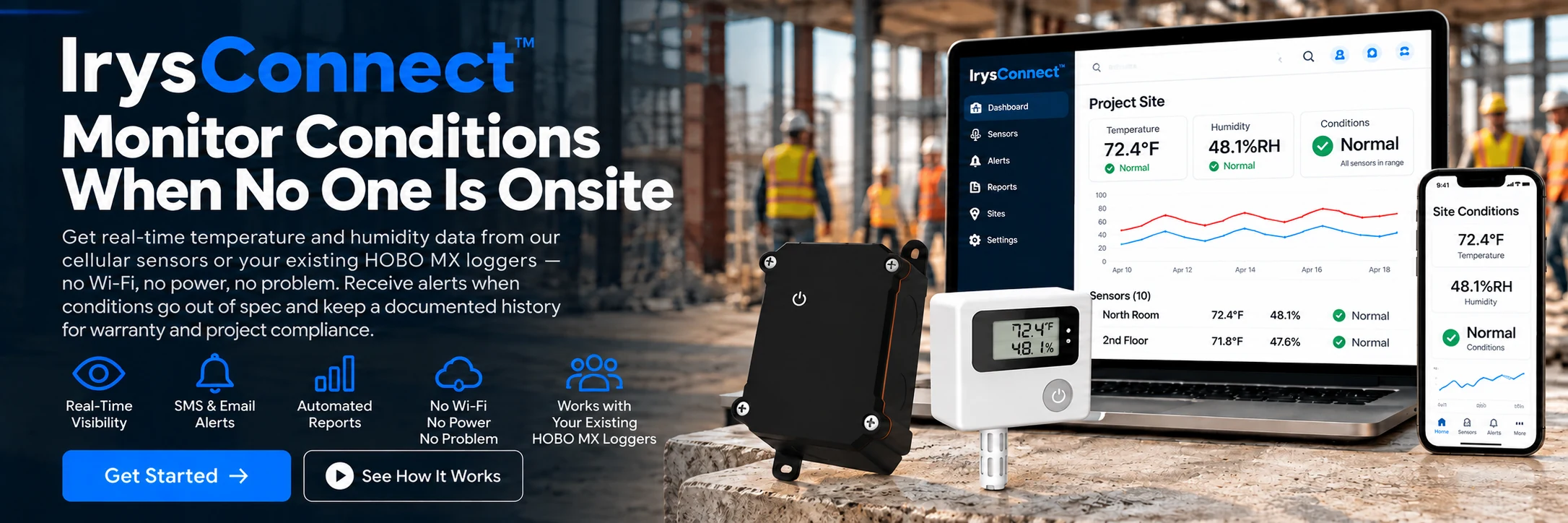
DIRECT CELLULAR SENSOR
IRYS Connect™ Sensor
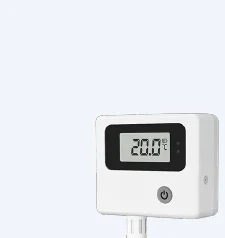
Own the sensor. Send site conditions to your inbox without Wi-Fi.
Conditions can change overnight, over a weekend or across an entire project. IRYS Connect™ gives your team remote visibility, alerts and historical reporting so you can respond without waiting for the next site visit.

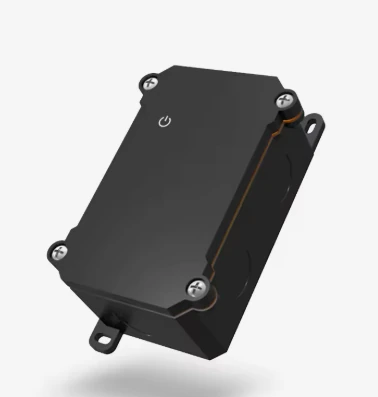
No Wi-Fi. No external power. No problem. Pair one IRYS Connect™ Bridge with one existing compatible HOBO® MX logger, or buy a standalone IRYS Connect™ cellular temperature and humidity sensor. Choose Site Alert with daily email readings and automatic email alerts for $19/device/month, Live Dashboard with SMS alerts and charts for $29/device/month, or Project Pro reporting for $39/device/month.
Own the sensor. Send site conditions to your inbox without Wi-Fi.
Keep your logger and access its readings remotely, without visiting the site to download data.
Keep your existing compatible HOBO® MX logger. IRYS Connect™ sends its readings to your email inbox—no jobsite Wi-Fi required.
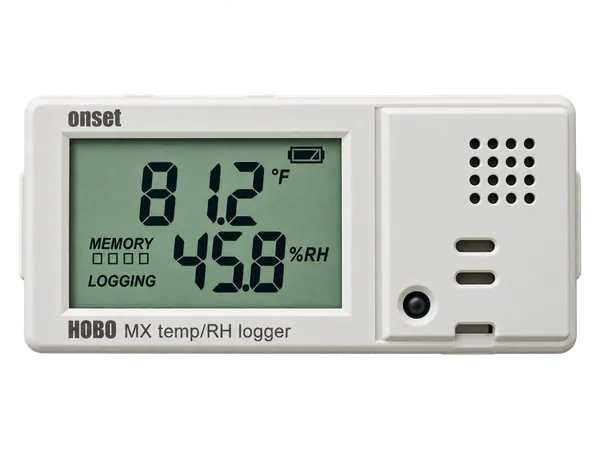
Your existing field logger remains on the jobsite.
Connects compatible HOBO MX loggers to email readings through a cellular network.
View conditions remotely, configure threshold alerts and maintain historical reports.
HOBO® is a registered trademark of Onset Computer Corporation. IRYS Connect™ is an independent product and is not affiliated with, sponsored by, or endorsed by Onset Computer Corporation or LI-COR, Inc. HOBO MX compatibility varies by model; see the Compatibility page for supported models.
Choose IRYS Connect™ Sensors or our cellular bridge for compatible HOBO MX loggers. Buy the hardware once and select a monthly plan for readings by email, alerts, or reports.
Standard setup: one bridge, one compatible HOBO logger, one monthly subscription. Every sensor has its own monthly plan at the published per-device rate. Group multiple sensors together under an optional location in your dashboard.
Call us: 404-445-6543 →